For me, my first political memory was from the presidential election of 1976. America’s choice was between Gerald Ford (R) and Jimmy Carter (D). I was 11 years old at the time. My father and mother supported Gerald Ford and so naturally I was a Ford supporter. On the morning of the election, I remember standing at the bus stop at the corner of Preakness Way and Edwin Drive, holding up a makeshift Ford sign, yelling “Vote for Ford!” at the cars passing by. My best friend John, the same age, stood next to me waving an American flag and yelling “Vote for Carter!” at the same cars.
At our age, we really didn’t know much about politics, and our minds certainly hadn’t hardened into any strict partisan positions. We still had, for the most part, open minds. We were just having fun. Politics, policy, and the leadership of our nation was going to happen regardless of who won. We didn’t feel uneasy or disturbed about who won. This sense of permanency, of the fundamental decency and stability of the American way of life, was never something we doubted. Like the stars in their courses, it was the law of our mental cosmos. And this was so, in large part, because our society respected and demanded certain norms from our public officials & leaders.
At 11 years old John and I might not have understood what the issues were, but we saw two gentlemen (Ford & Carter) who comported themselves in a manner that showed dignity and respect for the office they sought. Of course, just 2 years earlier President Nixon had resigned in disgrace because he had violated those norms (and the law) and his own party, putting country over party and politics, told Nixon he needed to resign. It was a sad day for the nation, but a victory for the rule of law and the American way of life.
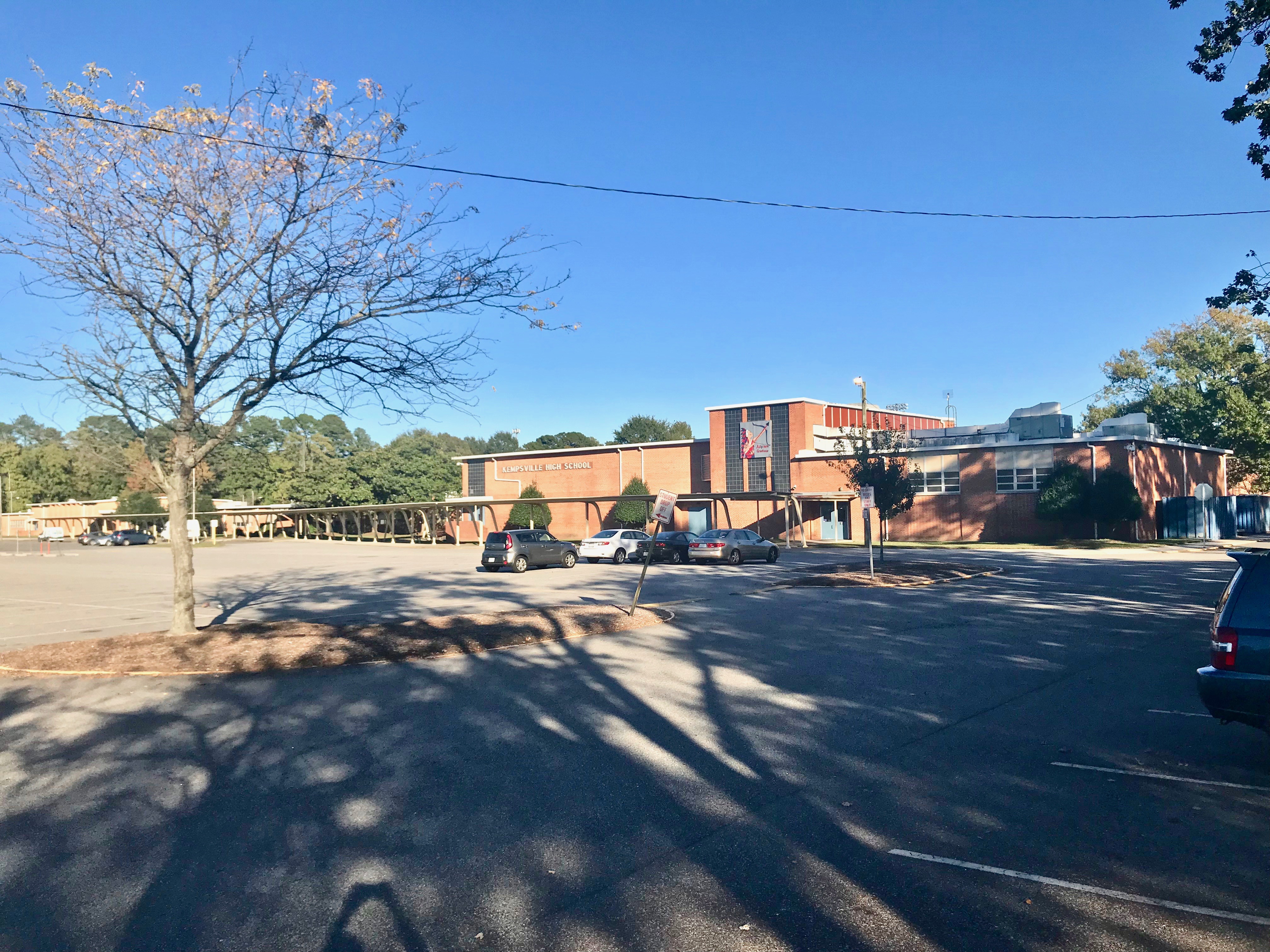
Kempsville High School, Virginia Beach, VA. (Photo by Jeff Wills, October 27, 2017)
At 24 years old I moved from the Virginia Beach, Virginia, area where I was born and raised, to the Washington D.C. area, where I have lived ever since. Of course over the years my wife and I have traveled back a lot to visit family and friends. I’ve always been a sentimental person, and its gotten worse as I’ve gotten older and had children. Time is a curious thing, and like Thoreau, it’s a stream I like to go fishing in.
I took the above picture in October of 2017. So about 9 months ago now. Surprisingly, this view is basically the same one I had every weekday morning during my 10th grade year as I pulled my car into the Kempsville High School (KHS) parking lot. The school year was 1982/83. What surprised me, and the thing that still fascinates me about this picture, is just how little the view has changed in the 35 years since I left KHS and transferred to F.W. Cox High School.
KHS was already 16 years old, and overcrowded, when I arrived in 1982. But here you have it exactly—or so it seems—as I remember it: The same bleached red brick building, without any noticeable exterior renovations, with its trademark covered walkway in front. This view—a reminder of a bygone world—set off a whole chain of related memories.
At that moment, in my mind, I could hear a female voice making announcements on the PA system, then the final bell ringing (7 throughout the day), and I could see the crowds of kids emerging from school, many boarding one of the parked yellow school buses lined up in two rows, paralleling the covered walkway. And then there were those, like me, who drove to school. I could see them emerging from between the buses and fanning out into the parking lot. As I stood there preparing to take this picture with my iPhone, I could see the ghost of my former self walking between the cars in the filled to capacity parking lot, headed to my car, books in hand, fumbling for my keys. Like my fellow teenagers, I was in an upbeat mode. It was the best time of day, because, of course, I was leaving.
I wasn’t a particularly good student in school; in fact, I was pretty bad, owing to a lack of focus and my social life taking priority over my academic one. A typical teenage male problem it seems. I can’t say I have a lot of great memories from that year attending KHS, only that it was a significant part—9 months worth—of my teenage years. What really makes this picture and the related memories so wistful is how it reminds me of that unique time in my life. I was a teenage boy who’d recently gotten his learners permit and a new car—a 1982 black Ford EXP. Not exactly a cool set of wheels, but a nice new car nonetheless that I racked up, much to my dad’s chagrin, a lot of mileage riding around looking for friends and things to do. My dad was always shocked at how many miles I could put on a car in a year. It was the pre-cellphone era, so targets had to be hunted down, not quickly acquired via text message.
A car begins a whole new phase in a teenager’s life. My parents were easy going and forgiving and so naturally, being a self absorbed kid, I took full advantage of that and spent a lot of time on the roads and hanging with friends. My grades suffered. The most significant friendship I made from my year at KHS was with an easy going guy named Joe Smith. Yes…that’s his actual name. From Joe’s friendship, I connected with a whole new group of friends and had my first serious girlfriend. It was the best of times, it could sometimes be the worse of times, it was a time of growth, a time maturing, and a time of trying to find my way.
Back then my dad would often remind me “these are the best years of your life son.” He meant that for now (because of him) I didn’t have to worry about paying bills and keeping a roof over my head, I didn’t have adult cares to contend with, I just needed to focus on “getting an education,” and staying out of trouble. Two things that became even more of a struggle from that point on. But the truth is I’d do it all over again. Those really were great times, some of the best years of my life, and it all worked out…thank God!!
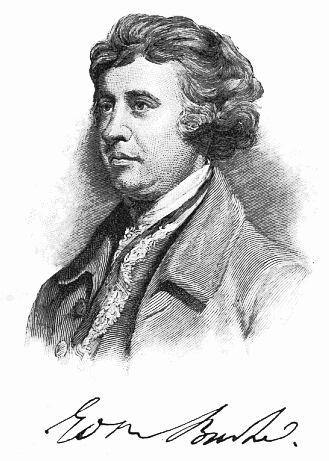
In 1791, in a letter to a Member of the National Assembly, the British philosopher and statesman Edmund Burke wrote:
Men are qualified for civil liberty in exact proportion to their disposition to put moral chains upon their own appetites, — in proportion as their love to justice is above their rapacity, — in proportion as their soundness and sobriety of understanding is above their vanity and presumption, — in proportion as they are more disposed to listen to the counsels of the wise and good, in preference to the flattery of knaves. Society cannot exist, unless a controlling power upon will and appetite be placed somewhere; and the less of it there is within, the more there must be without. It is ordained in the eternal constitution of things, that men of intemperate minds cannot be free. Their passions forge their fetters.
The above quote calls to mind another quote by the Roman historian Tacitus, relating to the character of his late father-in-law Agricola, “He took from philosophy its greatest gift: a sense of proportion.”
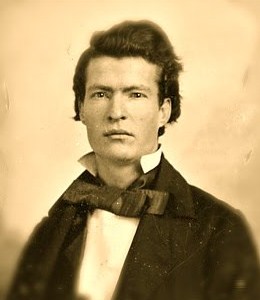
I knew Mark Twain had served briefly in the confederate army when the Civil War broke out in 1861. He served 2 weeks, had enough of “retreating,” so he abandoned the confederate army and headed West (Nevada) with his brother to sit out the war. I had read about Twain’s Civil War service only in secondary material, but recently I finally got around to reading Twain’s own essay on his Civil War experience in a piece he called The Private History of a Campaign that Failed.
I should note, Twain grew up in Missouri, a slave state and largely southern in culture, and was piloting steamboats on the Mississippi River when the war broke out.
After reading Twain’s story, I couldn’t help but post the second paragraph, a model specimen of Twain’s humor and charm as a writer:
Out west there was a good deal of confusion in men’s minds during the first months of the great trouble, a good deal of unsettledness, of leaning first this way then that, and then the other way. It was hard for us to get our bearings. I call to mind an example of this. I was piloting on the Mississippi when the news came that South Carolina had gone out of the Union on the 20th of December, 1860. My pilot mate was a New Yorker. He was strong for the Union; so was I. But he would not listen to me with any patience, my loyalty was smirched, to his eye, because my father had owned slaves. I said in palliation of this dark fact that I had heard my father say, some years before he died, that slavery was a great wrong and he would free the solitary Negro he then owned if he could think it right to give away the property of the family when he was so straitened in means. My mate retorted that a mere impulse was nothing, anyone could pretend to a good impulse, and went on decrying my Unionism and libeling my ancestry. A month later the secession atmosphere had considerably thickened on the Lower Mississippi and I became a rebel; so did he. We were together in New Orleans the 26th of January, when Louisiana went out of the Union. He did his fair share of the rebel shouting but was opposed to letting me do mine. He said I came of bad stock, of a father who had been willing to set slaves free. In the following summer he was piloting a Union gunboat and shouting for the Union again and I was in the Confederate army. I held his note for some borrowed money. He was one of the most upright men I ever knew but he repudiated that note without hesitation because I was a rebel and the son of a man who owned slaves.
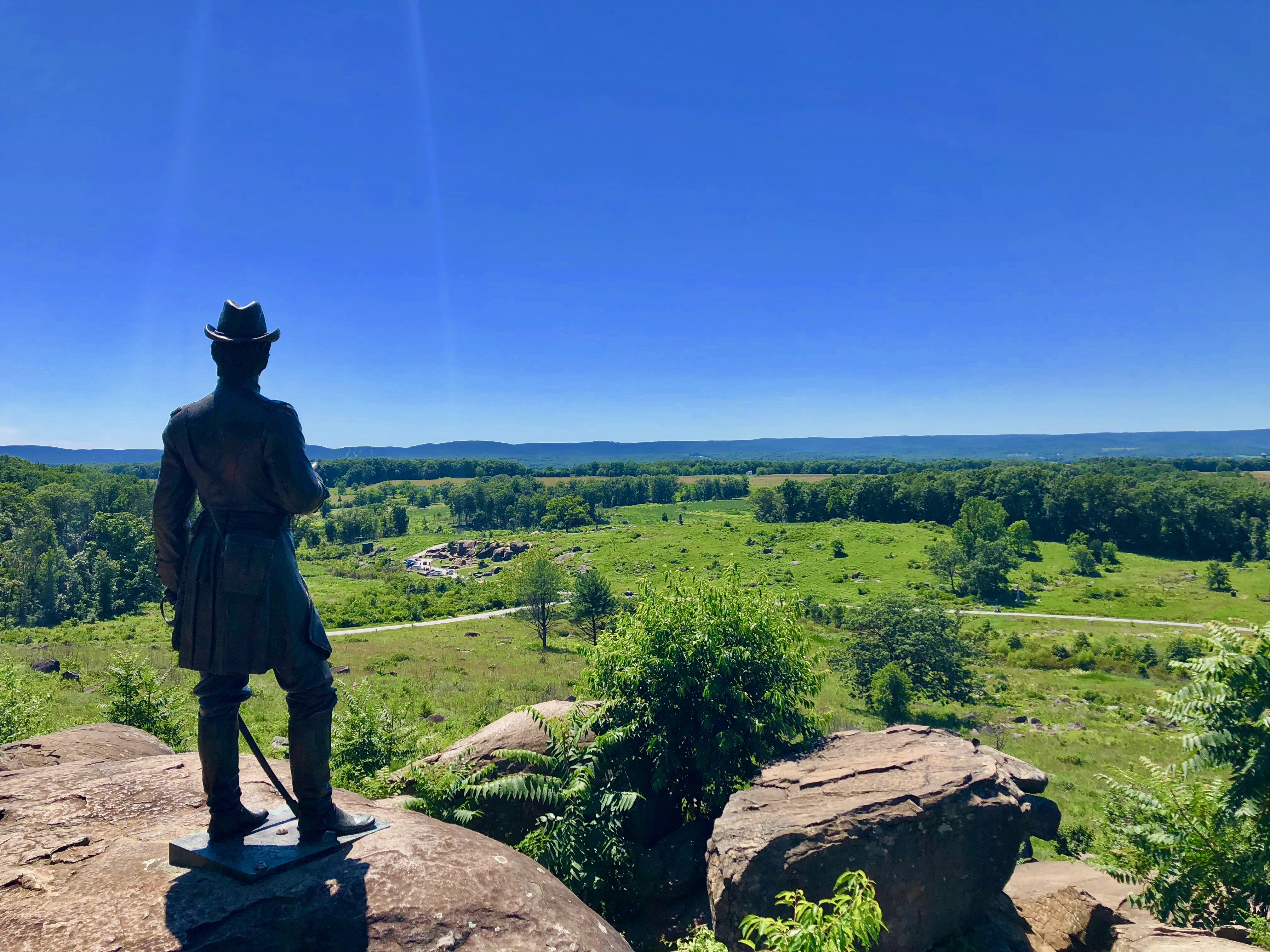
July 1, 1863, a 155 years ago today, the Battle of Gettysburg began. The battle would last three days (July 1 – 3). It would be the bloodiest battle of the entire Civil War, with upward estimates of 51,000 casualties between the two armies. It was the beginning of the end for the Confederacy, and from Gettysburg’s blood soaked fields, a nation would seek “a new birth of freedom.”

 Jeff Wills