Instruments of Self-Exploration

IMG_1120Over the past few days my wife and I have been painting my book room and boxing up books. A lot of books! Anyway, my wife, having superior organizational skills, (and an app), scanned bar codes and marked boxes so it would be far easier to find a particular book later on. Of course I slowed the progress. I would go along, handing her book after book and then suddenly stopping mid stream. I’d stare wistfully at a book, begin thumbing through it, rereading underlined passages, remembering the thoughts and feelings I’d had when I’d first read it. I know, just pathetic. Looking at all those books made me wonder what my love for books and reading had really done for me over the years.

As I stood there wondering, I reached for a book I’d read that just happen—naturally—to be right in front of me. I opened it and the first passage I’d underlined in pencil read:

We turn to books in the hope of better understanding our selves and better engaging with the meaning of our experiences. Let me say, right off, that I believe a work of art is primarily concerned with the creation of beauty, whether through words, colors, shapes, sounds, or movements. But it is impossible to read serious novels, poetry, essays, and biographies without also growing convinced that they gradually enlarge our minds, refine our spirits, make us more sensitive and understanding. In this way, the humanities encourage the development of our own humanity. They are instruments of self-exploration.

— Michael Dirda, Book by Book

I love this passage of Dirda’s. At best, all a love for books and reading can do is encourage the development of our own humanity. It’s up to each of us to allow that to happen. And that, my dear reader, is the project of a lifetime.

Sunrise on the Beach

IMG_0933
(Photo by Jeff Wills, August 24, 2018, Myrtle Beach, SC)

Even on vacation I rarely sleep past 7 a.m. Decades of being up at o-dark-thirty for work have worn some solid grooves. And, truth be known, whether by habit or disposition, I love the early morning.

So while everyone was still asleep this morning, I was up and out of our vacation condo walking down to the beach. The time was around 6:30 a.m.

Walking along the access path, through the dunes, and out into the open beach at this time in the morning has a spiritual feel to it. It can feel like you’ve entered some sacred space, some verge, between two worlds. (I suspect a yearning for this religious feeling is partly why some people love to live near the beach.)

Usually there are other fellow supplicants on the beach at this time in the morning. There are joggers, meditators, shell hunters, couples and individuals walking, and all of us, it seems, in a solemn silence, our souls mesmerized by the sound of the surf and the gentle, caressing light, of the emerging sun illuminating that infinitely awe–inspiring horizon.

In Front of One’s Nose

George_Orwell_press_photo
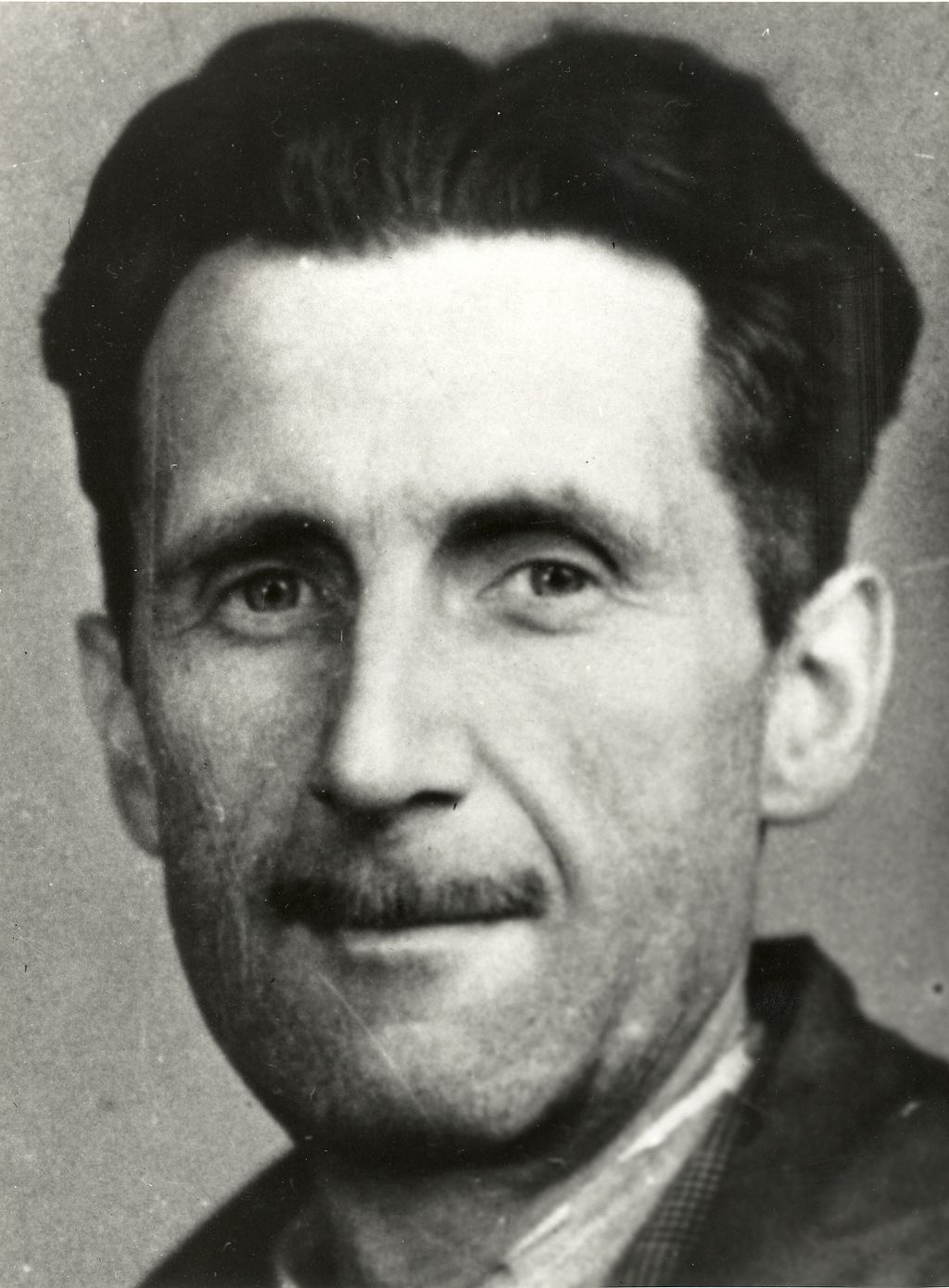
George Orwell

In one of Orwell’s essays he writes, “To see what is in front of one’s nose needs a constant struggle.” I read this essay years ago and the quote still hits me at times when I’m struggling to pay attention to the course of a discussion or observe some interaction or event. By the way, we say “pay attention” for a reason, because it requires effort. It “costs” us something to be present and focused. My lovely wife will sometimes remind me that I tend to run a deficit in my attention budget. So I have some work to do myself.

Anyway, Orwell recognized that most people may look, but they struggle to see what lies right in front of them. Of course we all know a good portion of our fellow travelers who simply don’t want to see—because they might not like what they see! It might weaken their web of beliefs, which would disturb their world and potentially overturn some settled opinion they cherish. And so we beat on boats against the current having those utterly pointless arguments with friends and relatives for whom critical reflection and a change of mind were never on the table. Don’t waste your time with those types. You’re better off talking about the weather instead.

But I should note here that the “in front of your nose” type of thinking and awareness Orwell is referring to is more about the attention paid to the subtleties and nuances of the moment.

A lot of the forces that shape who we are operate outside our consciousness awareness. Trying to realize these forces in operation is the point. Orwell might remind us that’s why propaganda, well orchestrated, can be so effective. This is why history is crowded with groups of people that, at times, have believed monstrous lies. If you’ve been alive long enough you may have finally accepted the fact that people aren’t primarily rational, they’re primarily emotional. Emotions are largely what moves them. The trick, of course, is to get to people early on in their lives (older folks are usually ossified mentally) and try to emotionally invest in them the importance of things like civic duty, a work ethic, learning, intelligence, goodness, and the spiritual benefits of truth…faith, hope, & love.

So try to remember Orwell’s words as you go about your day and keep reminding yourself to pay close attention to what’s happening right in front of your nose. You might be surprised at what you see and learn.

Those Cherished Walks in the Snowy Woods

Whenever we have a good snow I love to go for a walk in the woods. Walking in the wintry wonderland has always been somewhat therapeutic for me. This love for walking in the snow started when I was a kid. We’d have a good snow and school would be cancelled, so I’d usually play in the snow half the day and then sometime after dark I’d go out and walk in the snow. I can still remember those nighttime walks in my old Virginia Beach, Virginia, neighborhood. No one would be out but me. There was a alluring peace and stillness in the thick, frosty air. It was a tranquilness and calm enticed by the gentle sounds of falling snow, the low roar of the wind in the tree tops, and that icy crunching sound my boots made as I stepped in the virgin snow.

Back then we didn’t have woods behind our house, but since 2001 I’ve had acres of woods behind my house to walk in when the snows come. And these walks are even better now, because most of the time since, say, around 2004 or so, I’ve had a little partner. First it was my oldest son, but he’s too grown-up for that now. Then, around 2012, my youngest son, who loves nature and, like his dad, loves to walk in the snowy woods, took-over as my partner.

We had a good snow on January 5th and the temperatures remained frigid, so we’d had 2 good days where we went for a walk together in the wintery wonderland behind our home. These walks with both my sons have been special. This recent walk with my youngest son, though, really reminded me of what’s made the company of my two sons on these walks so very special. It’s not just the snow and hiking through it, and the fun, it’s really all about the father and son connection and the shared memories. As we walked and climbed and helped each other up slopes and across the icy creeks, my youngest son, having a great time, would say the little things a father will never forget: “We’re a team, dad.” “Isn’t this beautiful dad.” “It’s so calm and peaceful out here, dad.” “I love you dad.”

These father-son walks in the snowy woods will always be memories I cherish.

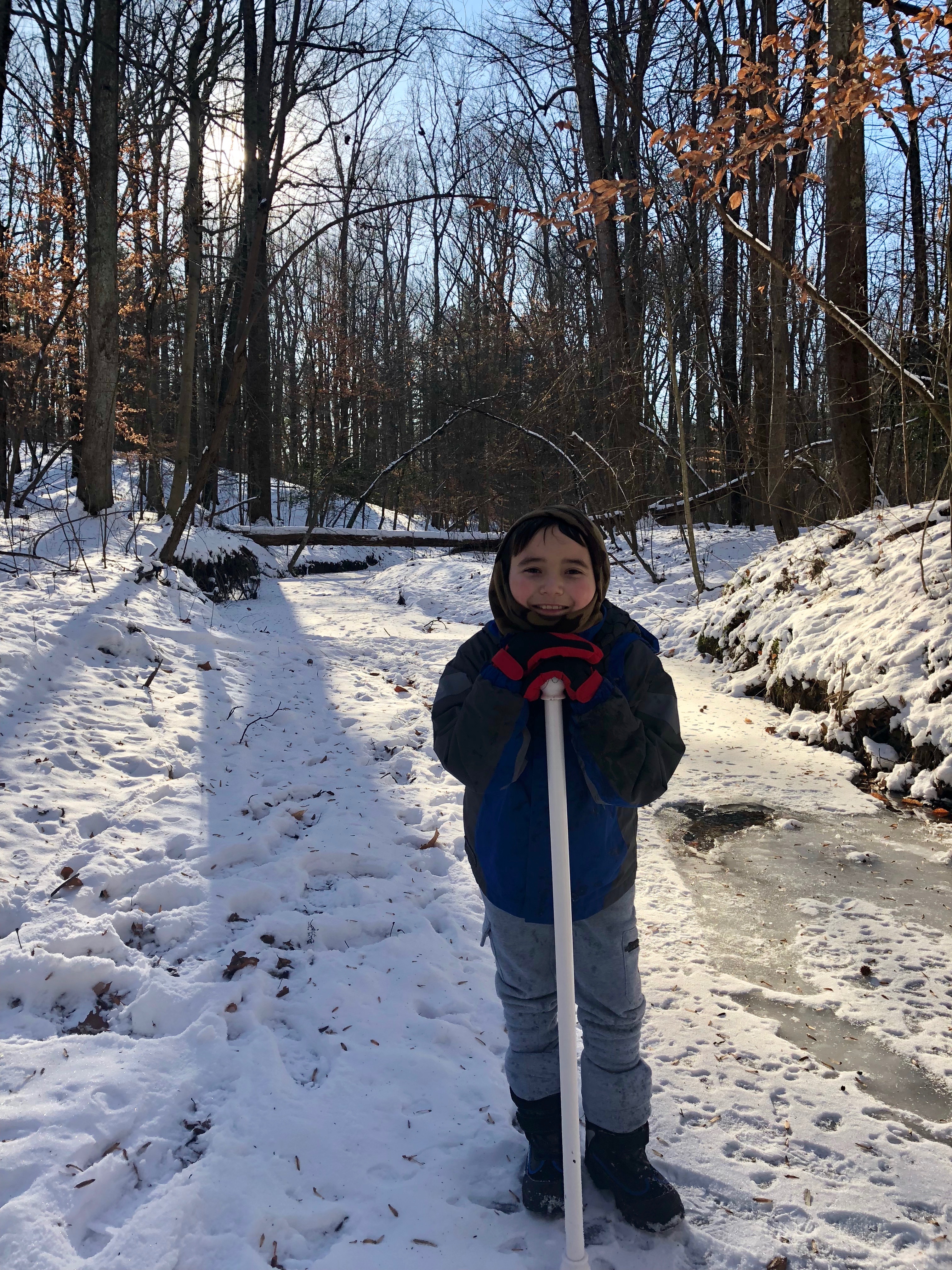
IMG_0102
My partner with his walking stick

We all have to dig…from time to time

I remember Mark Twain using a shovel as symbolism to describe the need for checking one’s conscience—seeing if it’s still there under all the inevitable compromises and accumulating weight of life. I don’t remember the exact phrase, but roughly speaking it could be stated as follows:

I handed him a shovel.

“What’s this for?”

“Your conscience. Go dig for it.”

When I first read it I chuckled at the simplicity and blunt straightforwardness of it. I liked the metaphor. Twain was being humorous, of course. But humor can be one of the best ways—via the backdoor of laughter—to communicate a simple, but sometimes resisted, truth about ourselves or others. The idea of digging deep down to find the moral and spiritual ore is an archetype of the ages. Like most everyone I know, I have to find the symbolic shovel and go excavate from time to time…I hit rock periodically, break the damn thing, and have to get another shovel. They can break easy you see, and so the digging can be tiresome and frustrating and sometimes I throw the damn shovel in the bushes and storm off.

But, like all of us, I know the digging needs to be done, has to be done, from time to time, if I’m to keep my soul and not lose my way. And so I always keep a shovel near by and try never to let life’s weight get too burdensome before I go digging and clearing out the excess around the core.