The Ghosts of Gettysburg

This post is about civil war history, but it’s also written as a memento for my youngest son to remember our trip by.

In great deeds, something abides. On great fields, something stays. Forms change and pass; bodies disappear; but spirits linger, to consecrate ground for the vision-place of souls. And reverent men and women from afar, and generations that know us not and that we know not of, heart-drawn to see where and by whom great things were suffered and done for them, shall come to this deathless field, to ponder and dream.

— Joshua Chamberlain at the Dedication of Maine Monuments, Gettysburg, PA, October 3, 1888

***

At cemetery ridge looking out toward the confederate position on seminary ridge

Last October 29, 2016, I visited the Gettysburg battlefield with my friend Rich and my youngest son. It was a beautiful autumn day. The temperature was perfect. The skies clear. The colors were at their peak. It was a lovely day to reflect and daydream.

Like with any meaningful place, there’s a unique spirit-of-place to Gettysburg that stills the soul and leaves a lingering presence, haunting the corners of your mind long after you’re gone.

The impetus for this particular trip had three things behind it:

First, my love for history and biography. I’ve read and learned a lot about the Civil War and the leading characters of this epic historical drama. The battle of Gettysburg was the biggest, mostly costliest battle ever fought in this hemisphere. At the end of 3 days of savagely intense fighting, there were upwards of 51,000 casualties between the two armies. Consider that just for a moment. Over an approximately 72 hour period, there were almost as many casualties incurred at the Battle of Gettysburg as there were U.S. troops killed (59,000) in the entire 10 years of the Vietnam War. For any student of American history, you can’t learn enough about the Civil War or what happened at Gettysburg and how it changed the direction of American history and the shape and trajectory of our nation leading up to the present. There are many great books out there, but I suggest you begin with the best. The Civil War historians Bruce CattonShelby Foote, and James M. McPherson have produced some of the finest literary histories ever written. Stephen Sears wrote one of the best, most comprehensive histories of the Gettysburg campaign. And who can forget the absolutely absorbing, pulitzer prize winning, historical novel by Michael Shaara, The Killer Angels, and the movie based on it. There’s a lot of great literature about the Civil War. Any aspiring writer can learn his or her craft just by reading Catton, Foote, and McPherson alone.

The study of war is so much more than a study of strategy, maneuvering, and the calculated application of violence. The history of warfare (as does all history) teaches us many things, but it’s an especially good tool for teaching leadership, whether it’s for the personal or professional domains of our lives. Violence, to be sure, is the shroud of war. But within this covering fabric is the vast interweaving of human qualities, both base and noble. To study and learn from this collision of circumstance and character is one of the best educations in human nature, human excellence, and human folly you’ll ever get. “History is,” Lord Bolingbroke once said, “philosophy teaching by example.” Hopefully this type of liberal education, as it was intended, inspires each of us to emulate the virtuous and the noble—to be guardians of civilization and civilized values. An education in any of the Liberal Arts is ultimately about improving the heart and mind, but historical study in particular provides the best laboratory for examining what human beings have actually done, said, and suffered. Literature, historical or otherwise, has the potential to greatly expand our empathetic and intellectual horizons. It’s a never ending journey of discovery. It has the potential to positively transform your life.
fullsizeoutput_27ec
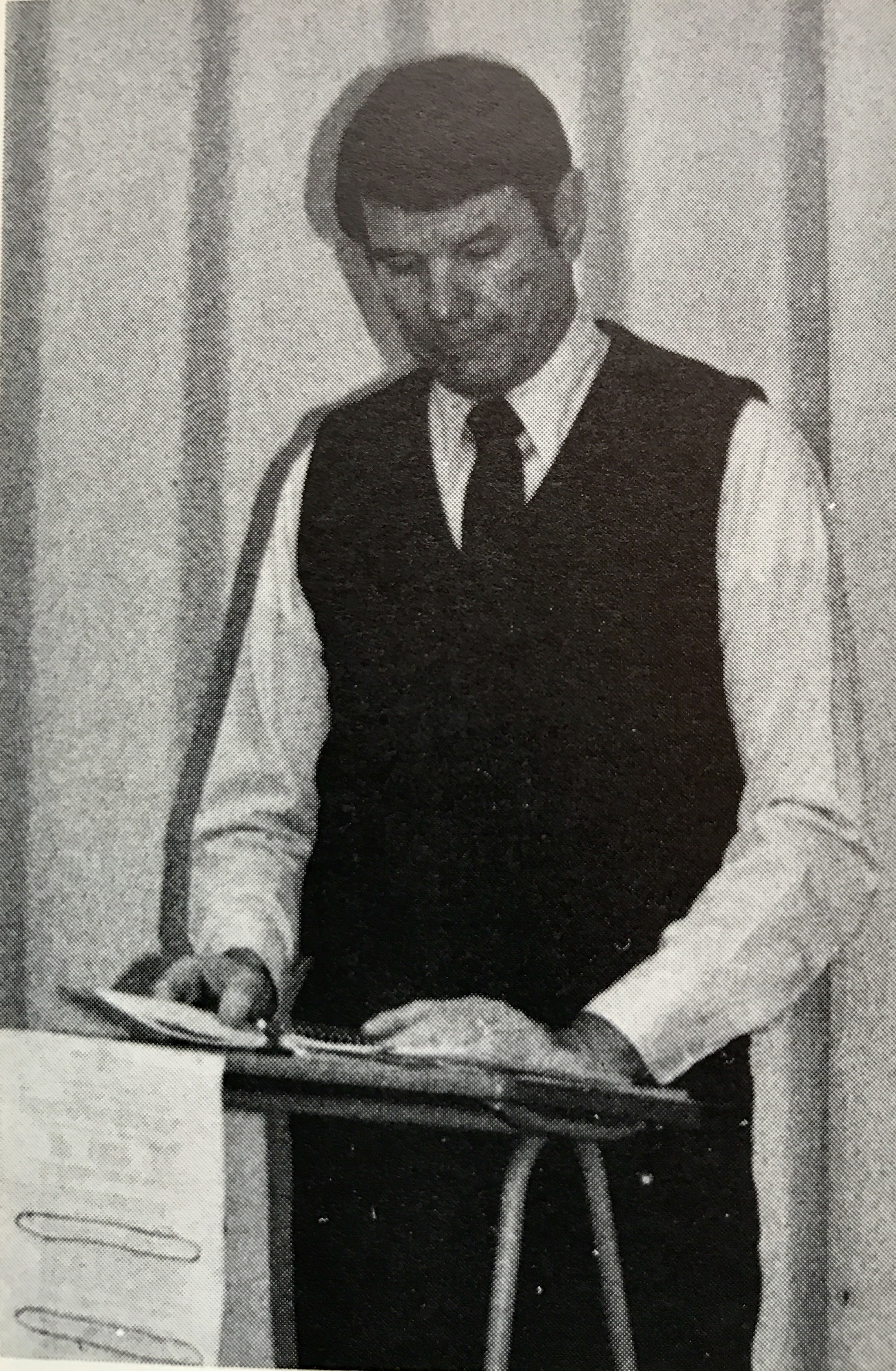
Donald S. Fuller, 1981, KJHS

This brings me to a brief aside. I think it’s important to remember the great teachers of our life, those who helped form who we are today. I date the beginning of my lifelong fascination and love for history to my time in Donald Fuller’s history class at Kempsville Junior High School (now Kempsville Middle School) in Virginia Beach, Virginia. Don Fuller was a retired Naval Officer and teaching was his second career. He had a real passion for teaching and he really knew how to make history interesting and relevant to my understanding of the world. I can still remember how I’d approach him after class to get more details about a famous person, battle, or event that he’d discussed during class. He would take his time with me and often draw on the chalkboard to illustrate his point. I can still remember him drawing the details of Hannibal’s “bending bow” strategy at Cannae. He knew so many interesting things about the battle and the characters involved. I remember being fascinated by the depth and breath of his knowledge, and thinking to myself how I’d like to be that knowledgeable about history one day. I can still recall the sound of his unique voice. About a decade or so after attending his class, I visited him at Kempsville Junior HS, where he was still teaching. He remembered me at first sight and was glad to see me. We had a good long talk standing in the hallway. He was still the teacher, and I was still the admiring student. He was a big influence in my early life and certainly a big reason History has been one of the passions of my life. In its original Latin derivation, the word inspire means “to breath into,” and that is what Don Fuller did for me. He inspired me. I really admired him, and I will never forget him.

img_0286
At the Penn Memorial

Secondly, I also wanted to visit Gettysburg because my good friend Rich had never been there, and he wanted to take some pictures (I didn’t know at the time, that another motive for Rich wanting to go was his secret mission to help get me out of the house so my lovely wife could prepare for my surprise birthday party, that afternoon, when we got home!). And lastly, but most importantly, I wanted to go to Gettysburg so I could spend some quality time with my youngest son, Seth. This would be his first trip to Gettysburg and hopefully one among many to historically significant places over his life.

Our first stop that morning, after touring the visitor center (where I bought my son a toy musket and canteen), was the federal army’s position along Cemetery Ridge. Union or federal army troops had retreated to this position (the high ground) and formed defensive lines during the 1st day of battle (It was a 3 day battle, July 1-3, 1863).

The battlefield, especially the federal army side, is replete with monuments and memorials. The largest and most impressive is the Pennsylvania memorial. All around the outer edge of this massive stone structure are large bronze tablets with the memorialized names of approximately 34,000 officers and soldiers from the Pennsylvania regiments that fought in the battle.

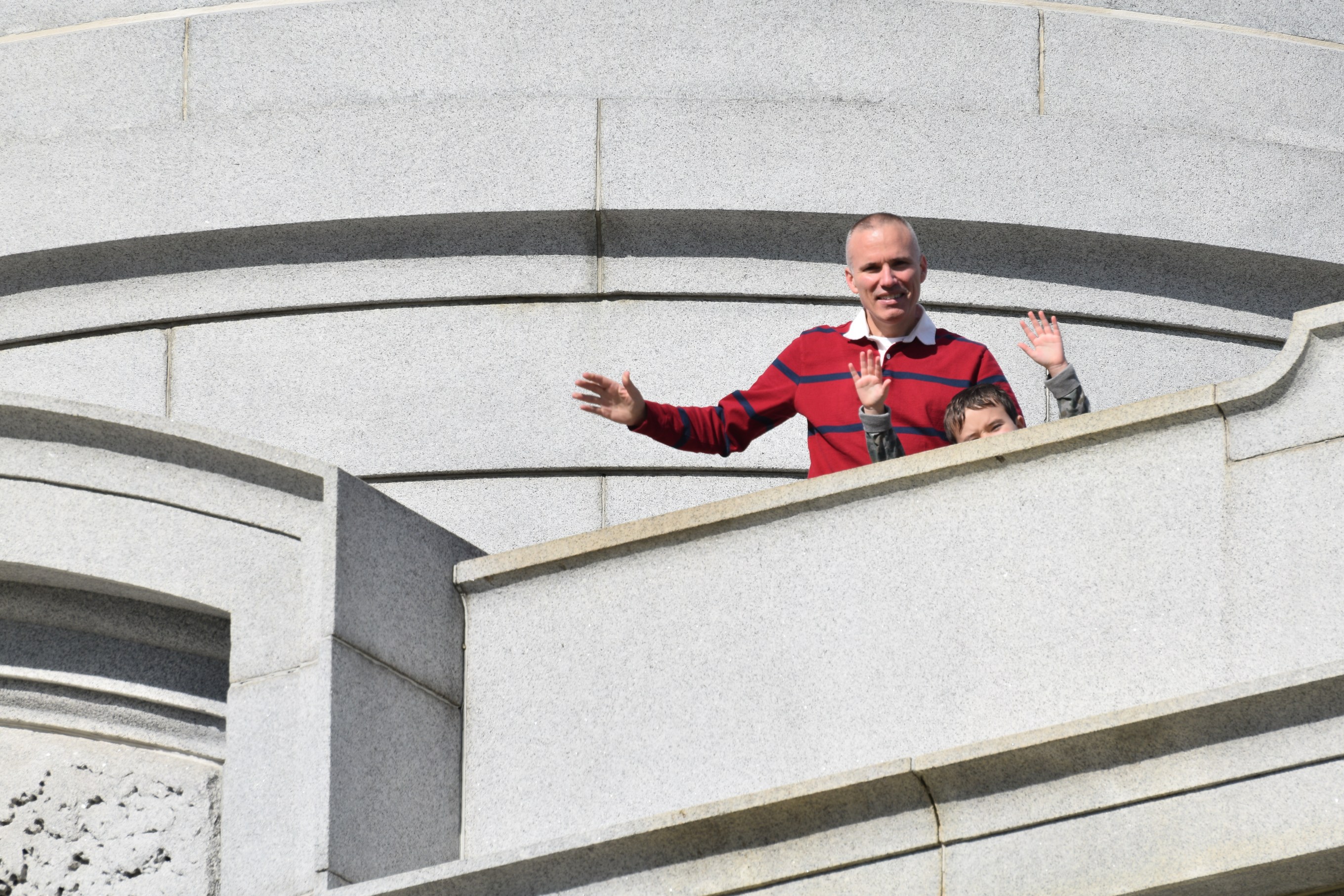
While walking around the Penn memorial, Seth and I discovered that it had an upper level for viewing the battlefield, so we headed up. My son was nervous about being up so high. He leaned against me protectively and held my hand tightly, as we climbed the narrow spiraling stairwell. As we continued up I heard his shaky voice, slightly strained with fear, say “I’m afraid of heights dad.” I’d never heard him say this before, so I pulled him closer and we continue up. We emerged onto a circular viewing platform and a magnificent view. From this position we were near the center of the federal army line. To our south the line runs to Little Round Top—the far left end of the federal army line— and then turning our gaze northeasterly, we saw Culp’s Hill, which is the far right end of the federal army line. Directly to our West was the confederate army position in a tree line along Seminary Ridge.
dsc_7723
Atop the Pennsylvania Memorial

We lingered a little while and I took some pictures. We waved to Rich who was still in the parking lot below getting his camera equipment together. He took a picture of us waving from the top of the memorial. My son didn’t want to linger, so we walked around the memorial dome, taking in the view from all sides, and then headed back down.

We moved from the Penn memorial to another part of Cemetery Ridge known as the “bloody” Angle. This is the point confederate General Robert E. Lee focused his main attack on the afternoon of July 3rd at about 3 p.m. Known as Pickett’s Charge, it was comprised of between 13,000 and 15,000 men, mostly Virginians, and was ultimately repulsed (with over 50% casualties), but not before a brigade of Virginians led by Brigadier General Lewis Armistead breached the federal line at the Angle. Armstead’s men fought bravely, but there simply wasn’t enough of them to exploit the breakthrough. There’s a plain stone marker at the spot where Armistead was hit and fell during the close quarter fighting. That spot is known as the High Watermark of the Confederacy.

img_0317
The “Bloody” Angle
Continue reading “The Ghosts of Gettysburg”

Making George Orwell Great Again

george-orwell
George Orwell

The new Trump Administration has been a boon for sales of George Orwell’s book 1984. The novel is a literary masterpiece. Originally published in 1949, it’s a dystopian novel about authoritarianism. The most famous quote, which you’ve probably heard at one time or another, is “Big brother is watching you.” The novel introduces us to concepts like Newspeakdoublethink, and thoughtcrime. The decades old novel is suddenly back on the bestseller list (an Amazon #1 recently) because some of the book’s ideas are speaking to us at this unique time in American history. What this book does, or I should say what all good literature does, is provide us with a vocabulary for articulating our feelings and thoughts. Being able to speak about something allows us to better understand it. Freedom of thought, as the novel tells us, is partly brought about by an expansion of expression via language. Thought and language are tied together.

This brings me to a general theme in Orwell’s work. Like every good writer Orwell was concerned with the truth. For example, Orwell had fought in the Spanish civil war on the side of the Republic against the fascist. He had personally witnessed some of the key events in the war. After the war, he’d read a lot of reports about the war and found a lot of what he’d read contained blatant falsehoods. He knew what was happening. The fascist had ultimately won the Spanish civil war and they were now attempting to shape its history through propaganda…or as Orwell might say, they were purposely trying to create its fascist history. Authoritarian leaders, i.e. Franco, Hitler, and Stalin, where not just trying to control the present and the future, but also the past. Propaganda and lies were replacing history and fact and what actually happened. This terrified Orwell:

This kind of thing is frightening to me, because it often gives me the feeling that the very concept of objective truth is fading out of the world. . . . Nazi theory indeed specifically denies that such a thing as ‘the truth’ exists. There is, for instance, no such thing as ‘Science’. There is only ‘German Science’, ‘Jewish Science’, etc. The implied objective of this line of thought is a nightmare world in which the Leader, or some ruling clique, controls not only the future but the past. If the Leader says of such and such an event, ‘It never happened’ — well, it never happened. If he says that two and two are five — well, two and two are five. This prospect frightens me much more than bombs — and after our experiences of the last few years that is not a frivolous statement. (Underlining added)

I’ve read the entire 3 inch thick volume of the Everyman’s Library edition of George Orwell’s essays. It’s one of my top 5 all time favorite books. While Orwell’s novels are excellent, it’s in Orwell’s essays that I believe we get the best of Orwell as a writer and social critic. His essays are a first class education in the humanities and writing. Take my word on that. We could have a college level course just on Orwell’s essays and it would be a fascinating intellectual and moral adventure.

Being Orwellian, I think, should also mean having a scrupulous concern for precision, integrity, and facts in the way you think, write, and speak. The truth is usually complex and sometimes very difficult to get at, but it can only be genuinely approached through a moral courage and intellectual integrity we see on constant display in writer’s like George Orwell.

American Sniper

American-Sniper-2015-Watch-HD-Full-Movie-720p
Warner Bros. Pictures

I hadn’t originally planned on seeing the movie American Sniper, but the brewing controversy around the film piqued my interest. For those who don’t know, American Sniper is a film based on the book by the same name written by former Navy SEAL Chris Kyle. 

Kyle served 4 tours in Iraq and ended the war as the most lethal sniper in U.S. Military history. The controversy over the movie, as I take it, centers around whether the film actually represents Chris Kyle as the man he actually was, according to his own memoir, or did Clint Eastwood, the film’s director, engage in creative license as many have claimed.

I read Kyle’s book—every word of it—before I went to the movie. I also watched a large number of Youtube videos of Kyle, where he discusses his book, his life, and his views.

So did the movie portray Kyle as he portrayed himself in his own book? My answer is, well, no and yes.

First, why do I say no? The movie portrayed a Chris Kyle that appeared more sensitive and emotionally affected by the war and the killing than the book portrays. The Chris Kyle of his memoir makes it clear he enjoyed war and had no problem with anyone he killed — men, women, or in some cases, young boys whom he judged a threat to American soldiers. At times Kyle does come across a little raw in his book, which I think we can mark down as part warrior mindset, part bravado. The Chris Kyle of his book, for example, can say things like “I don’t shoot people with Korans—I’d like to, but I don’t.” That scene, those words, aren’t in the movie. 

Kyle is credited with killing somewhere around 160 Iraqi insurgents. At least, as he would tell you, that’s the “official number.” The impression he likes to leave in the book, and I believe he admits somewhere else, is that he killed a lot more Iraqis than the official number he’s credited with. No one knows exactly how many people Kyle killed unofficially, or under what circumstances, since only the official kills had, as he reminds us multiple times, a “witness” to each of them.

In the book, Kyle has the habit of reminding us there is “the official” side of the story and then there’s — wink and a nod — the unofficial side of the story. Of course we all know there’s an unofficial side in war. But most of us probably wouldn’t highlight or hint at that in regards to the number of people we killed without witnesses around. In fact, Kyle says he wished he could have “killed more.”

I will also add the movie took a number of liberties with events. For example, there is one paragraph in Kyle’s memoir about an Iraqi sniper by the name of Mustafa. Kyle said he never saw Mustafa and he “believed” Mustafa was killed by some other U.S. soldiers. However, one of the movie’s main themes is the hunt for Mustafa. At the end of the movie, in typical heroic Hollywood style, Kyle kills Mustafa with an incredible 2000 yard sniper shot. This is pure fiction. The movie has a number of other scenes and events that aren’t in the book and appear to have been added to the movie for the sake of dramatic tension. 

On the yes side of the movie—that it did portray Chris Kyle’s life. Well, I think the movie did a good job of showing the strained relationship between Chris Kyle and his wife, Taya. The movie was faithful in following the struggles they personally went through as a military family and as husband and wife. 

Bradley Cooper, who plays Kyle in the movie, also did a good job of playing Kyle. I thought Cooper did a good job with Kyle’s mannerisms, speech, and Texas twang. The movie did show some scenes right from the book, such as when Chris and Taya first met at a bar in California. I thought Bradley Cooper, while not giving an entirely accurate portrayal, which is not possible anyway, did give us a version of Chris Kyle. A version we should expect when Hollywood writers and movie making are involved. I wasn’t surprised, in fact, I rather expected it.

I think the controversy over the movie is partially driven by the fact that the war in Iraq was (and is) controversial. I think it’s fair to say now the war in Iraq was an epic mistake. I don’t think an honest person can disagree. But it’s also important to remember that soldiers have no vote in the wars they fight. They sign up to serve their country and are tasked with fighting the wars the nation’s commander-in-chief directs them to fight, regardless of whether any of us agrees with the decision. That’s a soldier’s duty and it’s important point to keep in mind.

When people began seeing the movie and the media began referring to Chris Kyle as “a hero” the critics jumped. In their mind, an illegitimate war doesn’t have legitimate heroes. It has legitimate victims: Iraqis and American soldiers. Secondly, the critics felt the portrayal of a more humane and sensitive Chris Kyle in the movie was nothing but Hollywood sugar coating, not an honest portrayal of a man who actually enjoyed killing “savages.”

Critics are correct in saying the movie doesn’t give us an accurate portrayal of the Chris Kyle of his memoir. So, again, they do have a legitimate point there. Kyle was, according to his own words, unmoved by the large numbers of people—basically a small village—he killed personally while in Iraq. In his mind these killings, each and every one of them, were justified. None of us, I remind critics, have any evidence at this time that Kyle killed anyone unlawfully or without justification while serving in Iraq. As far as we know “officially” (Kyle is grinning…believe me), everyone Kyle killed deserved it.

I have mixed feelings about Kyle the man of his memoirs. But I can say without hesitation, if I’m going to war I’d want Chris Kyle on my team. Regardless of whether we agree with the war, our mission must be to win it once we’re in it. Chris Kyle was a warrior to the core. Some of us may not like his manner or his bloodthirsty spirit, but when the shooting starts and you’re fighting for your lives Chris Kyle is the man you want there fighting beside you. It’s because of warriors like Kyle, sitting at his position of overwatch, that many American families were spared the loss or maiming of a loved one in Iraq. For that he certainly is a hero.       

To conclude, as a movie I recommend seeing American Sniper. While the movie does take license in its portrayal of the protagonist, and does have some factual flaws, it isn’t such a break from the Chris Kyle of the book that we can’t get a slightly blurred picture, or modified version, of the real Chris Kyle and the struggles our military men and women and their families go through in war. And the plain truth is, it’s a good war movie. It does give an accurate portrayal of the harsh realities of war—the life and death decisions, the struggles, the costs, the sacrifices and even, while some of us may not always feel comfortable with it, the type of people it takes to win.

Note: Chris Kyle was tragically killed at a Texas firearms range in February of 2013 by an Iraqi war veteran he was attempting to help. As of this writing the accused killer, Eddie Ray Routh, is about to go to trial for capital murder. 

Review of Alchemist of War by Alex Danchev

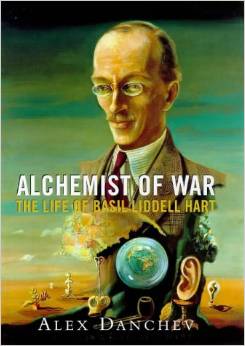
downloadI’m reasonably well versed in WWI and WWII history. I’ve been a dedicated reader of Sir John Keegan’s books and various other well known war historians for years, but all through the thousands of pages of history I’ve read I don’t recall seeing the name Basil Henry Liddell Hart. I first heard the name B. H. Liddell Hart while reading Robert Greene’s 33 Strategies of War. Greene’s discussion of Liddell Hart and the quotes Greene provided of the great strategist were very interesting and stayed with me. Liddell Hart seemed more than just a war strategist. So it was a pleasure while recently scanning the shelves of a used bookstore that I came across Alchemist of War: The Life of Basil Liddell Hart by Alex Danchev. This biography is good, not only because its portrait is so interesting but because Danchev is so artful at the rendering.

Liddell Hart served as an officer in the first world war. His experience with the futility of trench warfare pushed him to find a better way “to ensure that if war came again there should be no repetition of the Somme and Passchendaele.” With theories like The Man in the Dark and the Expanding Torrent, Liddell Hart began his search to solve the problem of “continued impetus against defense in depth.” The problem, as the tactics of WWI showed, was once an attacking army penetrated the defensive lines (trenches) of the enemy, the attacking force quickly lost momentum as it bogged down in layers of additional defensive works. The attacking army, at this point, then occupied a salient within the enemy line. The enemy, having better communications within it’s own lines, quickly organized their reserve forces on 3 sides of the attaching armies salient and either stalled the break-through, defeated it entirely, or beat it back while inflicting heavy casualties. This would happen over and over in WWI. Successful breaks in the enemy line or “exploitations” could not be properly followed up and exploited fully. Decisive victory, hence, was illusive. The war would be a stalemate, a bloody war of attrition in the “mausoleums of mud.”

Liddell Hart would eventually develop the Indirect Approach. This theory involved the mechanization of the army, with infantry tactics playing support instead of the leading role. Liddell Hart wrote: “Of all the qualities of war it is speed which is dominant.” Celeritas, speed and swiftness, are the primary virtues of a successful army and the thinking of a successful commander. You must be able to stay ahead of your enemy in movement and decision making. WWI Infantry tactics were no match for the advances in weaponry. Weapons like the machine gun changed warfare forever and so tactics had to evolve to avoid needless slaughter and stalemate. 

The Tank would be the answer to the tactical and strategic mobility needed on the battlefield to exploit a break-through in the enemy line. The Tank would be the battleship of the battlefield. A force of heavily armored Tanks could penetrate enemy lines and quickly exploit the break-through by driving further and further into the enemy’s defenses, disrupting communications and, more importantly in Liddell Hart’s view, affecting the mind of the opposing commander. Getting to victory is more than just defeating the enemy forces. The Indirect Approach was very much an attitude of mind and a psychology more so than strictly a battlefield tactic. As Danchev writes: “The indirect approach has usually been physical, and always psychological.”

On the battlefield, the Indirect Approach is about making the enemy commander quickly come to the realization in his mind that he’s defeated. This realization of defeat would hopefully bring the battle to a quick conclusion and avoid a needless slaughter. “In other words the strategy of the Indirect Approach is not so much to seek battle as to seek a strategic situation so advantageous that if it does not of itself produce the decision, its continuation by a battle is sure to achieve this.” As Ardant Pu Picq said: “Loss of hope rather than loss of life is what decides the issues of war.” The Indirect Approach is meant to bring the enemy commander to a quick realization that defeat is inevitable. As the battle quickly turns on the defeated commander and he sees the collapse of his defenses, the loss of communications, his mind comes to see the only option left.

The Indirect Approach would be Liddell Hart’s signature contribution to strategic theory. Like so many philosophical insights Liddell Hart saw the application of the Indirect Approach as applying to all human domains, not just warfare:

I have long come, with reflection on experience, to see that most of the fundamental military theories which I have thought out apply to the conduct of life and not merely of war — and I have learnt to apply them in my own conduct of life, e.g. the ‘man-in-the-dark,’ economy of force, the principle of ‘variability’ [flexibility], and the value of alternative objectives.

So also with the theory of the Indirect Approach, which I evolved in the realm of strategy in 1928-29, have I come gradually to perceive an ever widening application of it until I view it as something that lies at the root of practical philosophy. It is bound up with the question of the influence of thought on thought. The direct assault of new ideas sets up its own resistance, and increases the difficulty of effecting a change of outlook. Conversion is produced more easily and rapidly by the indirect approach of ideas, disarming the inherent opposition . . . Thus, reflection leads one to the conclusion that the indirect approach is a law of life in all spheres — and its fulfillment, the key to practical achievement in dealing with any problem where the human factor is predominant, and where there is room for a conflict of wills.

Whether it be in war, an argument with a friend, a discussion with your son or in the affairs of love, the Indirect Approach was a law of life that allows one who has mastered its application to overcome his opponent through adept indirect maneuvers rather than direct confrontation.

Alchemist of War is a great read. As far as I can tell it’s the only full length biography of Basil Henry Liddell Hart. Danchev does a superb job of drawing you in and holding your attention captive. At no point, in my view, did the narrative slow or become uninteresting. Danchev’s prose is entertaining for his incisive wit and verve. I found myself pulled along by my enthusiasm not only for the subject but for the enjoyment of Danchev’s style. A good biography written by a fine scribbler.